


What to Know Before You Begin
Moving to New Zealand is an exciting prospect. You may be relocating for work, moving closer to family or beginning an entirely new chapter here.
If buying a home forms part of your plans, it is likely to be one of the most significant decisions you will make. Before beginning your search, you may need to understand how your immigration status affects your ability to buy, whether Overseas Investment Office consent is required, how the New Zealand property market operates and where you and your family will feel most at home.
For most people planning a move, the journey involves answering five connected questions:
- Can I move to New Zealand?
- When and what am I legally able to buy?
- Where in New Zealand will provide the lifestyle I am seeking?
- How does the New Zealand property market work?
- How can I investigate and purchase confidently?
Answering these questions in the right order can prevent costly mistakes and turn a broad ambition into a practical relocation and purchasing plan.
This article brings together the experience of immigration, property law and buyer representation professionals to explain what prospective buyers should consider before beginning their search.

Can I move to New Zealand?
Your immigration pathway can influence when you are able to move to New Zealand, how long you can remain here and, in some circumstances, when you may be eligible to purchase a home.
The appropriate pathway will depend on your individual circumstances, including your citizenship, skills, employment, investment position, family connections and long-term intentions. Immigration requirements and processing timeframes may also affect when you can realistically begin your property search.
Specialist advice at an early stage can help you understand the options available, the likely sequence of events and any requirements that should be addressed before beginning your property search.
Planning your move and immigration pathway
Contribution from Shi Sheng Cai (Shoosh), Partner, Ashcroft Mitchell McGregor

01Residence class visa options
The most common residence pathways can be split into three categories: skilled employment, family, and investor.
The skilled employment residence pathways allow people aged 55 or younger with skilled employment or offers of skilled employment to meet residence requirements. Skilled employment residence pathways include the Straight to Residence and Skilled Migrant Category.
Family pathways, like the Partnership Residence Category, allow family members holding NZ residence to provide visa sponsorship.
Of all the current residence categories, the Active Investor Plus Visa category (AI+) is the only category with a residential property purchase exemption.
02Active Investor Plus Visa
The AI+ has attracted over 800 applications since policy revisions in April 2025 and has two subcategories: Growth, and Balance. The AI+ Growth Category requires a minimum investment of NZD $5 million into Growth Category investments for a minimum period of 3 years. The principal applicant is only required to spend 21 days in New Zealand over the 3-year investment term.
The Balanced Category requires a minimum investment of NZD $10million for a minimum period of 5 years, and allows for investment into bonds, particular property developments and listed equities in addition to acceptable Growth Category investments. Principal applicants under the Balanced Category are required to spend 105 days in New Zealand over the 5-year investment term, but have the ability to shorten the required number of days with additional investment into Growth Category investments.
03Different classes of visas
Temporary visas are valid for a defined period, starting from the date of issue and ending on a fixed date. In contrast, resident visas are indefinite in duration, and can be transitioned over to a Permanent Resident Visa (PRV).
The difference between a resident visa and PRV is that a PRV is indefinite and allows for travel out of and returning to NZ indefinitely whereas resident visas normally have a travel condition that expires. If a resident visa holder is outside of NZ without a travel condition, their resident visa will expire.
Temporary visas allow people to be physically present in New Zealand but do not provide the ability to purchase residential property.
04Australians and Singapore citizens
Australian citizens gain a NZ resident visa upon arrival in New Zealand. Australian Permanent Resident Visa holders must first apply for a New Zealand Electronic Travel Authority (NZETA), which then allows them to obtain a NZ resident visa upon arrival.
Singaporean citizens and Australian temporary resident visa holders must first obtain a visa to travel to New Zealand. In some cases, this can also be done through a NZETA.
05Immigration advice
We recommend exploring and seeking immigration advice as early as possible if people wish to spend time in NZ.
06Timelines
We recommend careful planning around timelines as it will take time for NZ resident visas to be processed and issued. Where residence categories allow for the immediate grant of a resident visa, we suggest planning around 2 months for AI+, 3-4 months for skilled employment pathways, and 4-7 months for partnership residence category applications.
We recommend adding at least 1 month for preparation, and factoring in any additional time required to meet residence eligibility requirements, such as accruing the required work experience for skilled work experience or living together for partnership.
07Common pitfalls
The most common mistake we see people make is not planning their resident applications carefully. Every applicant should be treated on a case-by-case basis and be prepared to navigate any potential issues that arise, including health, character, and eligibility requirements.
It is our strong recommendation to always get advice early, as these issues can have significant negative impacts on residence applications if not properly addressed, and the work of addressing these issues can introduce significant delays and risks to the application.
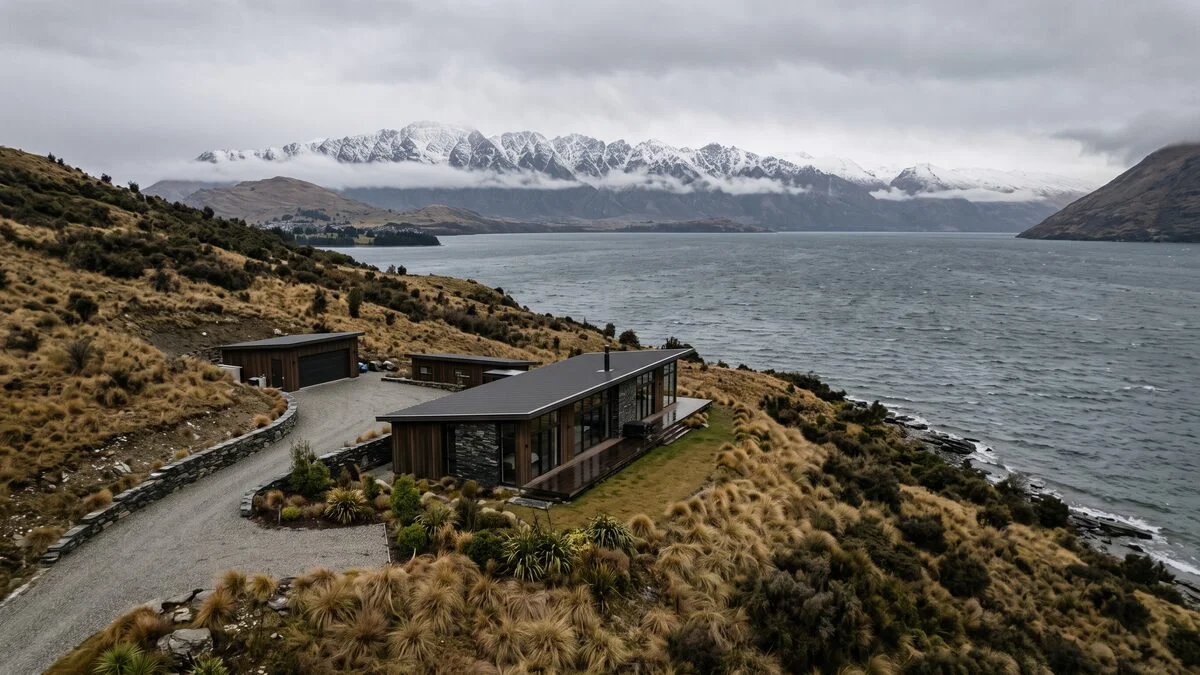
When and what am I legally able to buy?
Immigration status and eligibility to purchase property are related, but they are not the same. Immigration New Zealand determines whether a person has the right to enter, live or work in New Zealand, while the overseas investment rules determine whether an overseas person can acquire particular land or property.
Whether restrictions apply may depend on your citizenship, residency status, connection to New Zealand, proposed ownership structure and the nature of the land itself.
Your eligibility should be confirmed before you make an offer or incur significant costs investigating a property.
Purchasing residential property and Overseas Investment Office requirements
Contribution from Shaun McGivern, Director / Head of Property, Haigh Lyon Lawyers

01Before any agreement is signed
New Zealand’s overseas investment rules should be considered before any agreement is signed.
02Citizens and permanent residents
As a starting point, returning New Zealand citizens can buy residential property without Overseas Investment Office consent. New Zealand permanent residents may also buy without consent if they are “ordinarily resident” in New Zealand and are buying a residential property which is not “otherwise sensitive”.
In practical terms, this usually requires a residence class visa, for the person to be living in New Zealand for the preceding 12 months and be physically present in New Zealand for more than 183 days during that period. This last element does not require them to be present in New Zealand for 183 consecutive days but only to be there for 183 days during the 12-month period.
03When a property is otherwise sensitive
The nature of the property is always important. Purchases that appear to be simply residential may still raise issues and be classified as “otherwise sensitive” because of the legal classification, size, location or proximity to features such as the coast, rivers, conservation land or islands.
04Residence visa, not yet ordinarily resident
A person who holds a residence class visa but is not yet ordinarily resident may be able to apply for consent to buy or build one home to live in.
Pre-approval can be obtained from the Overseas Investment Office while a buyer is searching, and if pre-approval is not obtained prior to any agreement being entered into, that agreement must be made conditional upon consent being obtained. Ordinarily that consent can be obtained within 10 working days.
05Australians and Singaporeans
Australian and Singaporean citizens have different treatment under the overseas investment rules and can generally buy residential or lifestyle land without consent, although consent may still be required if the land is otherwise sensitive. Australian permanent residents may also be able to buy without consent if they meet the ordinarily resident requirements.
06Investor visa holders
There are also targeted provisions for qualifying investor visa holders through the Active Investor Plus Visa mentioned above and Investor 1 and 2 visas.
These provide a pathway that allows these residents to purchase or build one higher-value residential dwelling. This is provided the statutory requirements are met which are that they must hold the appropriate visa, acquire a property or land that will be built upon and which together have a value of over $5m and obtain consent from the Overseas Investment Office through their visa classification.
07Trusts, entities and partners
A buyer who is eligible personally will still face issues if that person however attempts to purchase land through an entity or trust that they have a beneficial interest in and so this must be considered if they don’t want to acquire it personally. If a person is acquiring land with a spouse or de facto partner only one of the couple needs to qualify provided the property being acquired is relationship property.
08Advice before you sign
Due to these complexities, buyers should obtain New Zealand legal advice before signing a sale and purchase agreement or paying significant investigation costs. Eligibility depends on the individual purchaser and the particular property. Confirming those matters early on helps ensure the agreement is correctly structured, any required consent is identified, and the buyer does not inadvertently breach the overseas investment rules.

Where in New Zealand will provide the lifestyle I am seeking?
Once you know that you can move to New Zealand and are legally able to buy, the focus shifts from eligibility to opportunity. Where will the lifestyle you envisage actually be found, and what will your budget secure there?
New Zealand is a beautiful country, with regions offering very different climates, landscapes, employment opportunities, communities and ways of life. Depending on where you choose to live, you may be close to beaches, mountains, native bush, vineyards or vibrant city centres.
Lifestyle opportunities can include hiking, mountain biking, skiing, snowboarding, sailing and diving. In some parts of the country, it is possible to enjoy the coast and the mountains within the same region. Proximity to an international airport may also be important, with Auckland, Wellington, Christchurch and Queenstown providing valuable connections for people who expect to travel regularly.
Before focusing on individual properties, consider:
- where family members will work or study;
- access to schools, healthcare and transport;
- proximity to family or support networks;
- your preferred climate, landscape and pace of life;
- the recreational and cultural opportunities you would like nearby;
- whether you prefer city living, a coastal community, an alpine setting or greater space and privacy; and
- how frequently you expect to travel within New Zealand or overseas.
The objective is to identify the location that best supports the life you are moving to New Zealand to create.
This can be difficult to assess through online research alone. Maps and property listings cannot always show how an area feels, whether everyday travel will be practical or how significantly one part of a suburb can differ from another.
Local knowledge and independent investigation can help you compare regions and communities, understand what your budget is likely to secure and focus your search where your priorities can realistically be met.
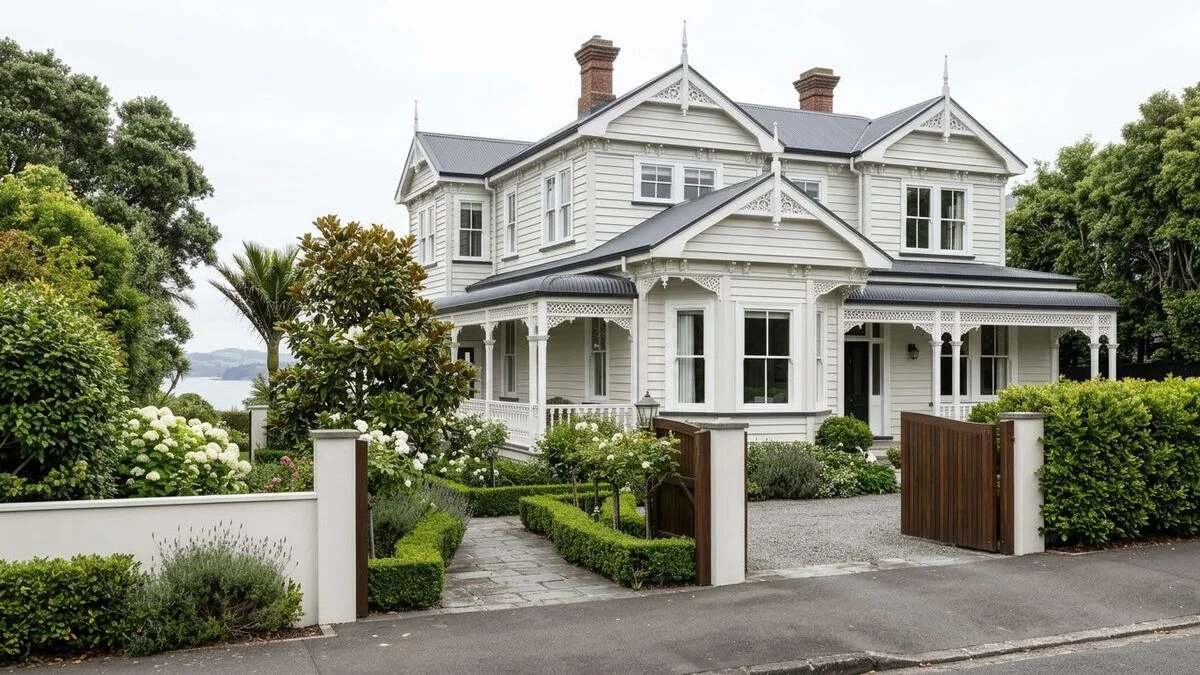
How does the New Zealand property market work?
The property-buying process in New Zealand may differ considerably from what you have experienced overseas.
Properties are most commonly marketed by negotiation, deadline sale or auction, with tender and advertised price also used. Each method affects how and when an offer can be made, whether conditions can be included and how much investigation may need to be completed beforehand.
Unlike in many overseas markets, an advertised asking price is relatively uncommon in New Zealand. Online estimates may provide a starting point, but they do not necessarily reflect a property’s position, condition, improvements or the most relevant recent sales.
Understanding who represents you is equally important. In New Zealand, the traditional real estate model is overwhelmingly centred on representing sellers. Most real estate agencies are engaged and paid by sellers to market and sell their properties.
A salesperson working for a real estate agency may provide buyers with information about the properties it represents, but they act for the seller, not the buyer. While they must act in good faith and deal fairly with buyers, they are required to act in the best interests of their client, the seller.
A licensed Buyer’s Agent works differently. They are engaged and paid by the buyer under a written agency agreement and work solely in the buyer’s interests. This allows them to search across the wider market, including publicly marketed, pre-market and off-market opportunities, assess properties independently and represent the buyer throughout the property acquisition.

How can I investigate and purchase confidently?
Whether you are buying from overseas or have already relocated, navigating an unfamiliar property market can be challenging. Online listings provide only part of the picture, and even attending a viewing does not necessarily make it easy to assess a property’s value, risks or suitability within the wider market.
Professional photography and staging may not reveal road noise, neighbouring properties, privacy, natural light, the condition of surrounding homes or how the layout feels in person. For buyers abroad, a licensed Buyer’s Agent can inspect the property and surrounding area, conduct detailed video walkthroughs and provide an honest assessment of its strengths, compromises and suitability.
Once a suitable property has been identified, its legal documentation, physical condition and other property-specific risks should be carefully examined. Enquiries may include reviewing the title, Land Information Memorandum, council records, building permits and consents, insurance availability and natural hazard information. Depending on the property, advice may also be required from a building inspector, engineer, surveyor or another specialist.
Your lawyer has an essential role in reviewing the legal information and sale and purchase agreement. The investigation required should reflect the particular property, land, ownership structure and intended use, rather than relying solely on a standard checklist.
The property’s likely market value should also be assessed independently of the seller’s expectations and marketing campaign. Recent comparable sales provide important evidence, but meaningful differences in location, land, condition, construction, views, privacy and improvements must be considered. This analysis is particularly valuable in a market where asking prices are rarely advertised and buyers may otherwise have little reliable guidance about value.
Make sure your offer is grounded in market evidence and aligned with your wider objectives, particularly when competition or emotion begins to influence the process.
Clear communication between your Buyer’s Agent, lawyer, financial advisers and other specialists is particularly important when a purchase is being managed across different countries and time zones. With the right team in place, an overseas buyer can remain informed, make considered decisions and progress confidently through to settlement.
Bringing your plans together
A successful move to New Zealand requires several important decisions to work together. Your immigration pathway and legal eligibility provide the foundation, while your choice of location, understanding of the market and assessment of value shape the property purchase itself.
For those buying from overseas, or navigating the New Zealand market for the first time, experienced professional advice and independent buyer representation can provide the knowledge and advocacy needed to make informed decisions with confidence.
The goal is not simply to purchase a property, but to secure the right home, in the right part of New Zealand, for the life you are building here.

About Tamzin Stevenson
Founder & Buyer’s Agent
Tamzin Stevenson is the Founder of The Buyers Agents and a highly experienced property strategist with a background spanning international markets, development projects, and complex acquisitions.